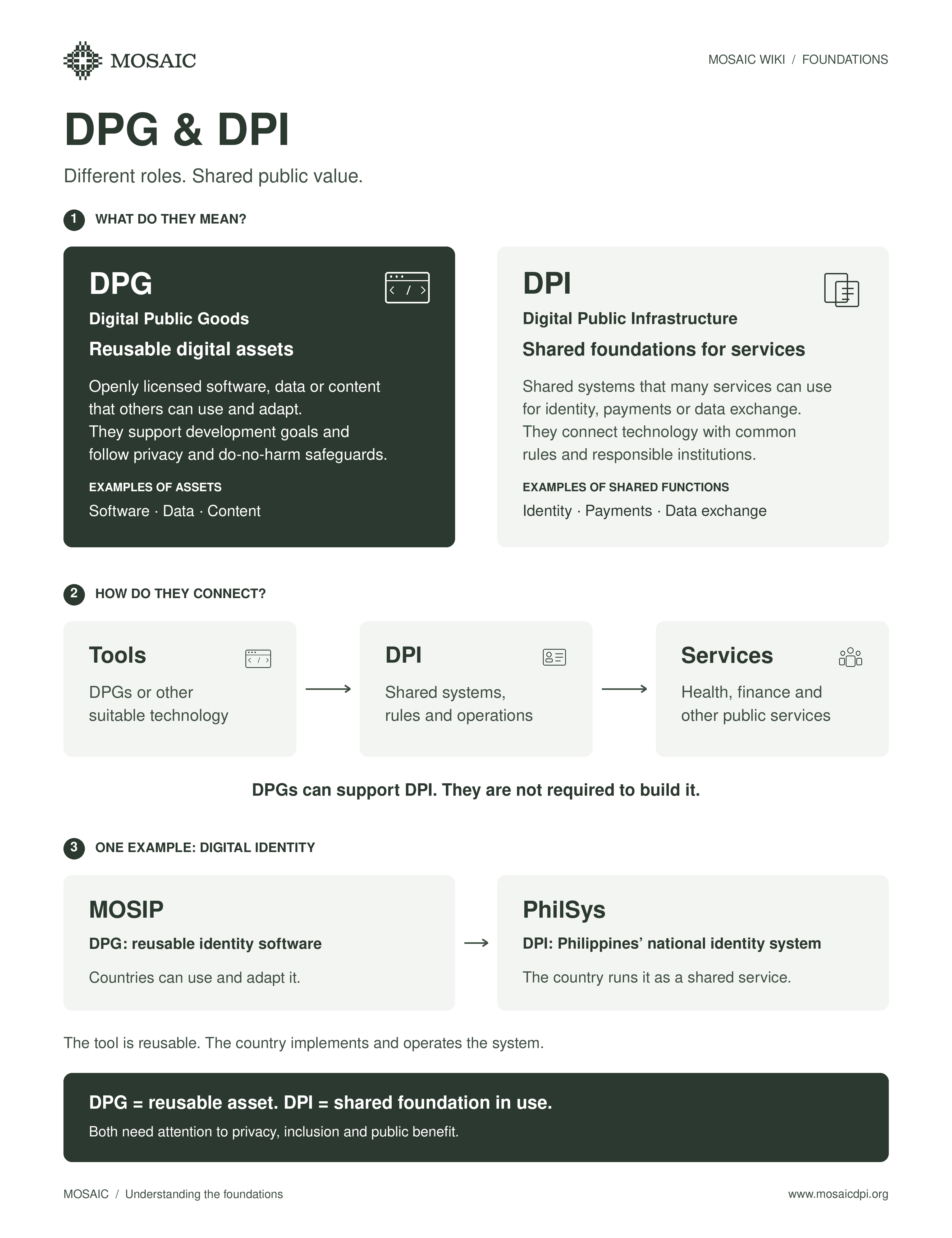
Digital Public Goods (DPGs) and Digital Public Infrastructure (DPI) describe different things. A DPG is an openly reusable digital asset. DPI is a shared foundation that services can rely on. DPGs can help build DPI, but adopting a DPG does not automatically create DPI, and DPI does not require DPGs.
What is a Digital Public Good?
Digital public goods are openly reusable digital assets that support the Sustainable Development Goals, respect privacy and applicable laws, and follow do-no-harm principles. They include open-source software, open data, open AI systems, open content and, in the broader definition, open standards. [1]
What is Digital Public Infrastructure?
Digital public infrastructure consists of shared digital systems that support essential functions across public and private services. Identity verification, interoperable payments and trusted data exchange are common examples. These functions provide a foundation that different services can reuse. [3]
DPI also needs institutions, participation rules, sustainable funding, operational capacity and safeguards. Putting a service online, or connecting two applications, is not sufficient by itself. The foundation needs to work across services and protect the people who depend on it. [6]
Are DPGs and DPI the same thing?
No. They are complementary concepts, with different responsibilities and tests. [4, 7]
| Question | DPG | DPI |
|---|---|---|
| What does it describe? | A reusable digital asset. | An operating shared foundation. |
| What makes it public? | Open reuse and a development purpose. | Public benefit and inclusive access. |
| What about software? | Software DPGs use open-source licences. | May use open-source or proprietary components. |
| Who is responsible? | The asset's owner, maintainers and community. | Operators and institutions governing the deployment. |
Are DPGs necessary to build DPI?
No. DPI can use suitable DPGs, other open-source software, proprietary technology, or a combination. The important questions are whether systems can work together through shared specifications, remain adaptable, and serve people under accountable governance. An open standard and an open-source licence are different things. [4, 7]
DPGs can offer a useful starting point: teams can adapt existing work, examine the code and collaborate on improvements. That can reduce repeated development and dependence on a single supplier. It does not remove the need to fund integration, hosting, maintenance, skills and safeguards. The choice should fit the country's needs and capacity. [1, 4, 6]
How do they relate in practice?
MOSIP is a recognised DPG that provides reusable identity software. The Philippines uses MOSIP in PhilSys, its national identity system. MOSIP is the reusable asset; PhilSys is a country implementation that can provide a shared identity function. Registration arrangements, participating institutions and operating responsibilities belong to that implementation. [5, 7]
A DPG may serve a specific task without becoming infrastructure. Equally, DPG recognition assesses the core solution, not every local deployment. Teams still need to assess the security, inclusion and governance of the service they implement. [2, 7]