Skip to content
Jakarta skyline at dusk

Mosaic — A DPI Alliance for the Global South

Shared infrastructure belongs to no single institution. That is why it so often goes unbuilt.

Across the Global South, the same problems are solved from first principles in one country after another. Mosaic works on one at a time. It documents the problem, assembles the institutions that can answer it, pilots the answer in a real service, and publishes the result openly — so the next country begins from evidence.

What is Mosaic

An alliance that owns nothing it helps build.

Orchestrates, rather than owns.

Mosaic designs the process and runs the pilot. The infrastructure itself is built by the institutions in the room.

Owns nothing it produces.

Whatever a pilot produces belongs to the institutions running it and to the commons.

Holds no data.

Mosaic designs and evaluates. It never sits in the path of anyone's records.

Verifying who someone is. Checking a qualification. Moving a health record between two providers. These are the same problems in every country, and each country solves them alone. Mosaic works on one at a time, from idea to proof, and publishes the result for the next country to use.

A steering committee decides which problems Mosaic takes on. A small secretariat runs the working groups and does the coordination that no single institution is funded to do — between the institution that owns the problem, the team that can build the answer, and the funder prepared to underwrite the attempt.

How we work

Every problem moves through the same five stages.

Move your cursor over a stage.

01

Identify

An institution brings a problem it needs to solve. Mosaic documents it with evidence and maps what shared infrastructure could replace.

02

Convene

Mosaic assembles the institution that owns the problem, the team that can build the answer, and the funder prepared to underwrite it. They agree what would count as success before anything is built.

03

Pilot

A working version is tested in one real service, before anyone commits to it as policy or as a standard.

04

Publish

The design, the evaluation and the result are released openly, including where the approach failed, so the next country starts from evidence rather than from scratch.

05

Propagate

The components validated in one sector are built to be reused, not rebuilt. Mosaic shapes them into a shared framework other sectors can adopt directly, so growth means extending the same rails instead of laying new ones.

Propagate becomes the next Identify — the cycle repeats.

Why Mosaic exists

Infrastructure built to stay open.

Mosaic exists because shared digital infrastructure — identity, payments, data exchange — too often gets built as somebody's product instead of everybody's foundation. When it stays closed, it serves whoever owns it. When it stays open, it serves everyone who builds on it.

That conviction shapes how Mosaic works: standards that let different systems talk to each other without forcing them to look alike, and nothing recommended as policy until it has been tested in a real service and published as proof.

Infrastructure is a public good.

Digital identity, payments, and data exchange are foundations every person and institution should build on. Open infrastructure serves everyone. Closed infrastructure serves its owner.

Interoperability comes from respecting differences.

The Global South is not a monolith. Mosaic seeks shared standards that let different systems talk — not uniformity. A mosaic is coherent because its pieces are distinct.

Proof before policy.

Mosaic pilots and incubates what it recommends. Every standard it endorses has been tested in a real service. It publishes the results — including where the approach failed.

Updates

Session and findings, recorded as they occur.

Each session, publication and announcement is listed here.

October 2026

Next event

The First Convening

The first session brings problem owners, builders, and funders together around the three open use cases. The objective is to fill all three roles on at least one of them, and to agree what a pilot would have to demonstrate.

Place and time to be updated
Jakarta, Indonesia
NT L GM VS

7 registered

Jakarta city lights at night

Who can join, and what do you get?

Each stage needs a different kind of partner.

MosaicProblemOwnersContributorsFunders

1 / 3 · Partner type

Problem Owners

Governments, institutions, and the people the problem affects.

What you bring
A validated public-service problem, the authority to convene around it, and direct knowledge of who the system currently fails.
What you can contribute
Share a validated problem, help define acceptable data-sharing and consent rules, and review a pilot’s safeguards before it reaches production.
What to expect from Mosaic
A neutral convener, evidence from a real pilot before any policy commitment, and a hearing on consent, privacy and exclusion before launch, not after.
How to begin
Name one public-service problem in your sector — or tell us who is currently locked out of it.
Join as a problem owner

Team

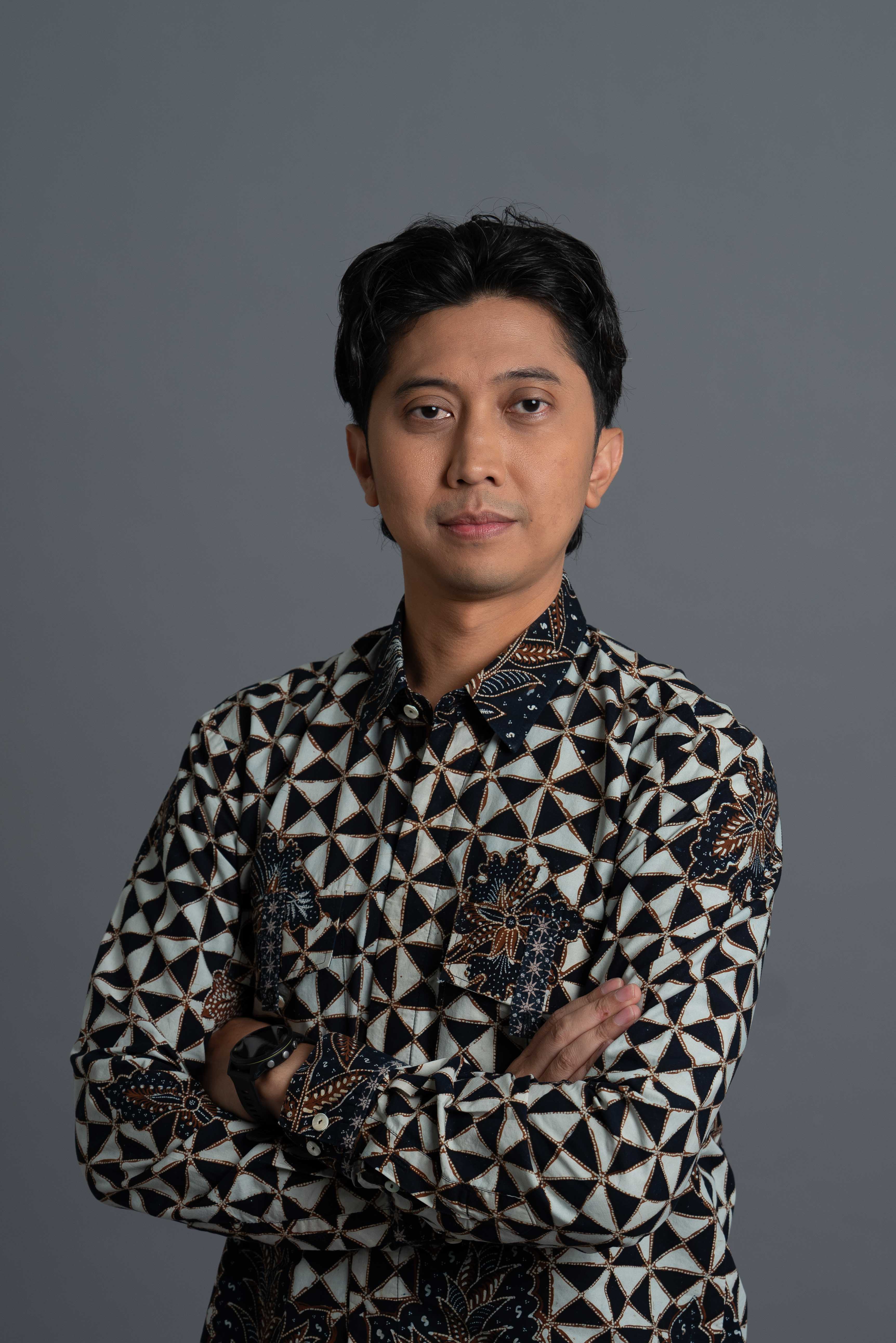
Meet the team

From problem design to pilot delivery, each person steers a different stage of the work.

Endiyan Rakhmanda

Endiyan Rakhmanda

Executive Director

Over 10 years of experience in AI, data, and government digital transformation. He focuses on translating public sector priorities into practical technology solutions, building transparent, citizen-centred services, and helping institutions become more agile, inclusive, and accountable in delivering public services.

William Tjhi

William Tjhi

AI & Digital Advisor

Over 15 years of experience in AI and machine learning across research, government, and industry. He focuses on developing language models for Southeast Asia, making AI more accessible across diverse languages and translating research into practical applications.

Giodio Mitaart

Giodio Mitaart

AI & Product Specialist

Experience in AI product development in banking/private sectors, digital strategy, and technology consulting. He focuses on translating business and policy needs into practical digital solutions that help organizations improve services.

Rita Damayanti

Rita Damayanti

Executive Partnership

8+ years of experience managing funded digital programmes for the UK Government (British Embassy Jakarta) in Indonesia. She focuses on translating strategic priorities into effective delivery, building trusted partnerships, ensuring inclusive, and also accountable program implementation.

Hilmy Hanif

Hilmy Hanif

Digital Specialist

Works at the intersection of digital technology, public policy, and strategic transformation. Focuses on shaping AI policy, strengthening data governance, and guiding digital public service development, helping institutions translate complex priorities into practical solutions that respond to people’s needs.

Ready to get involved?

Help move a use case from problem to proof.

Bring a real problem, an engineering team, research capacity, or funding — whatever your organisation does best. Every pilot is tested in the open before it becomes policy.